Book
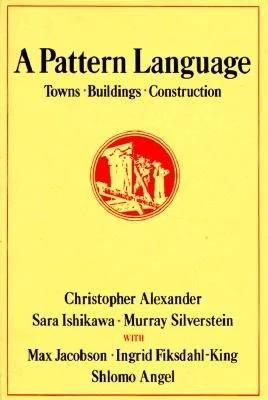
A Pattern Language
Towns, Buildings, Construction
- Christopher Alexander · Author
Living environments emerge from recurring patterns that support human use and adaptation. A Pattern Language offers a generative system of design knowledge connecting towns, buildings, rooms, and human life.
Find this book ↗Christopher Alexander and his collaborators present interconnected patterns for designing humane environments. The book influenced architecture, software design, pattern thinking, and knowledge systems by showing how reusable patterns can guide situated design.
A Pattern Language begins from the observation that some environments feel alive.
Alexander and his collaborators describe this aliveness through recurring patterns.
Each pattern captures a relationship between context, forces, and a design response.
The patterns are not rigid prescriptions.
They form a language that designers can combine, adapt, and extend.
This makes the book generative rather than merely descriptive.
It preserves accumulated wisdom while leaving room for local judgment.
Its influence on software and systems thinking comes from this form: knowledge as connected, reusable, situated patterns.
Design becomes participation in an evolving language.Why this belongs here: Knowledge Flow draws directly on pattern thinking. This book belongs here because it shows how knowledge can be structured as a living language that supports adaptation across contexts.
Why this belongs here
Knowledge Flow draws directly on pattern thinking. This book belongs here because it shows how knowledge can be structured as a living language that supports adaptation across contexts.