Book
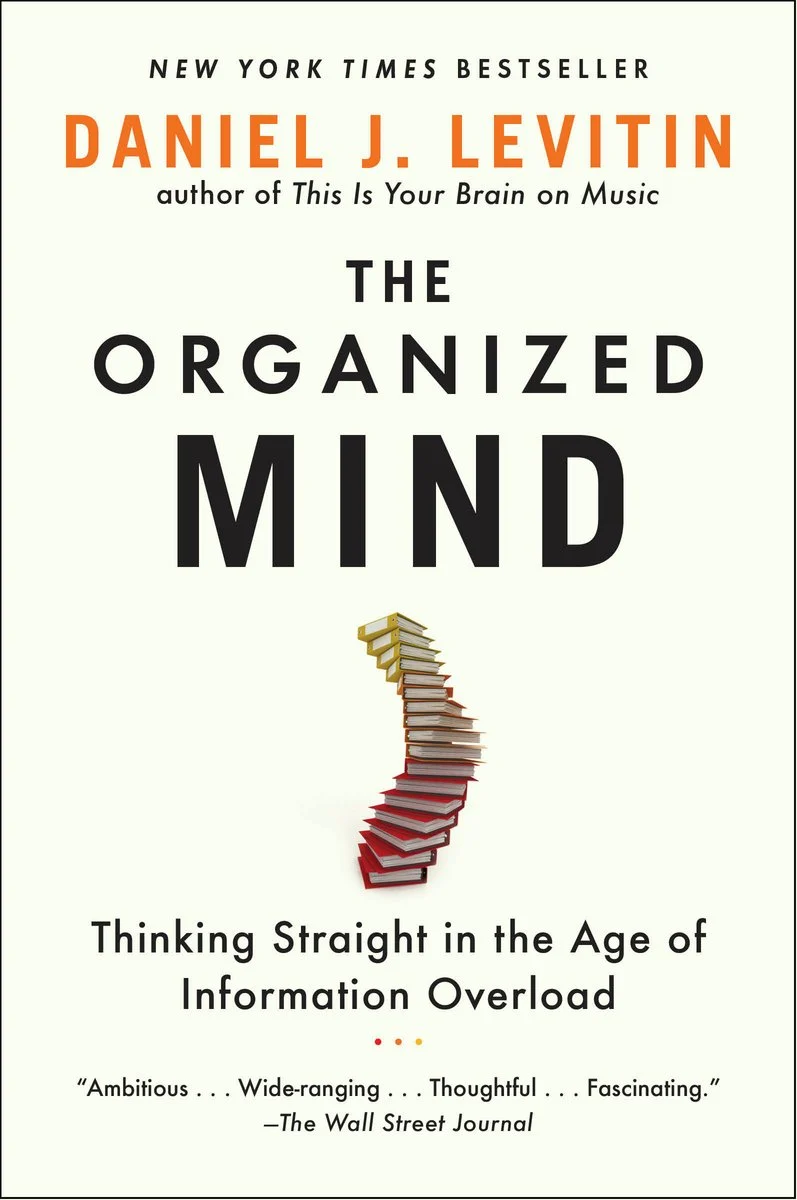
The Organized Mind
Thinking Straight in the Age of Information Overload
- Daniel J. Levitin · Author
Modern life overwhelms attention with more information than the mind can hold. The Organized Mind explains how external structures, habits, and environments can reduce cognitive load and improve decision-making.
Find this book ↗Daniel Levitin draws on cognitive science to show how memory, attention, categorization, and organization shape everyday thinking. The book offers a bridge between personal knowledge habits and the design of environments that support cognition.
Human attention is limited. The modern world continually asks people to remember, sort, decide, and switch contexts far beyond what unaided cognition handles well.
Levitin explains that organization is not a cosmetic preference. It is a cognitive support system.
The book explores how memory works, why decision fatigue matters, and how environments can either support or sabotage mental clarity. External structures such as lists, calendars, categories, reminders, and physical arrangements allow the mind to conserve attention for higher-order thinking.
It also shows that organization is never purely individual. Workplaces, tools, and information systems impose cognitive demands on the people who use them.
The Organized Mind is therefore about designing for human limits. It helps explain why knowledge systems should reduce friction rather than merely increase access.
Why this belongs here
Knowledge Flow depends on attention, memory, and usable structure. This book belongs here because it connects knowledge architecture to cognitive reality: people cannot use what their environments make too costly to think about.