Book
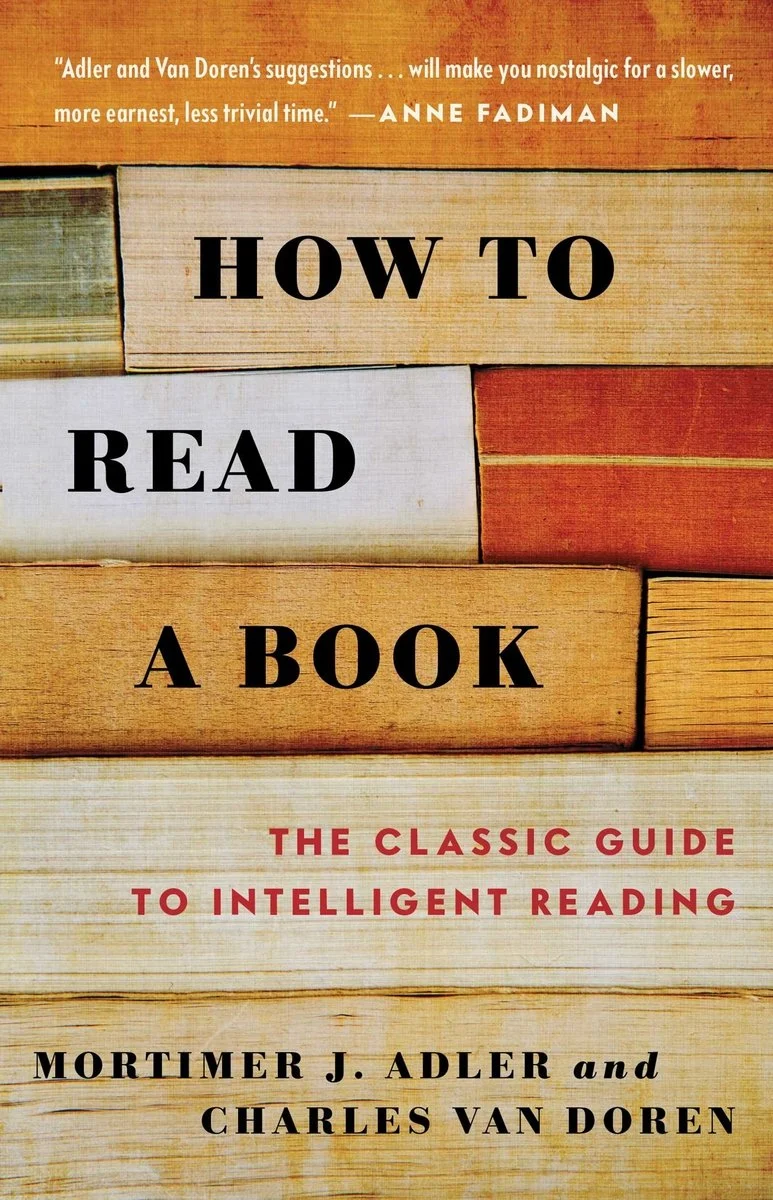
How to Read a Book
- Mortimer Adler · Co-author
- Charles Van Doren · Co-author
Reading is an active practice, not passive consumption. How to Read a Book teaches readers to engage deeply with arguments, questions, and ideas across levels of complexity.
Find this book ↗Adler and Van Doren describe inspectional, analytical, and syntopical reading as progressively richer ways of learning from texts. The book remains a foundational guide to reading for understanding rather than exposure.
Most people learn to decode text. Fewer learn to read as inquiry. How to Read a Book treats reading as an active conversation with an author.
The reader must ask what the book is about, what is being claimed, how the argument is made, and whether the claim is true. Analytical reading develops disciplined engagement with a single text.
Syntopical reading goes further, comparing multiple texts around a shared question. This transforms reading from consumption into knowledge construction.
The book teaches the habits required to turn books into thinking partners.
Why this belongs here
Knowledge Flow depends on people who can engage ideas deeply. This book belongs here because it provides core practices for transforming reading into understanding.